



Confused with “chatbot vs virtual assistant”? This article clearly differentiates both of them. We analyze their intelligence, functionality, and cost in use to help you decide on the right artificial intelligence solution for your business.
Introduction
In the past, if you had a question for a business, you had to call them on the phone and wait on hold. Alternatively, you could send an email and hope to receive a reply within a few days.
Now, things are different. Businesses are using Artificial Intelligence (AI) to help customers instantly, 24/7. This big change has brought new tools, but it has also created some confusion. People often hear the words "chatbot" and "virtual assistant" and use them to mean the same thing. But they are not the same at all. One is like a simple tool for a single job, and the other is like a highly intelligent assistant that can perform multiple tasks.
This article will explain the big differences between a chatbot vs virtual assistant. We will examine what sets them apart, the specific roles in which they excel, and how to determine which one is the best fit for your business.
Defining Chatbots
What is a Chatbot?
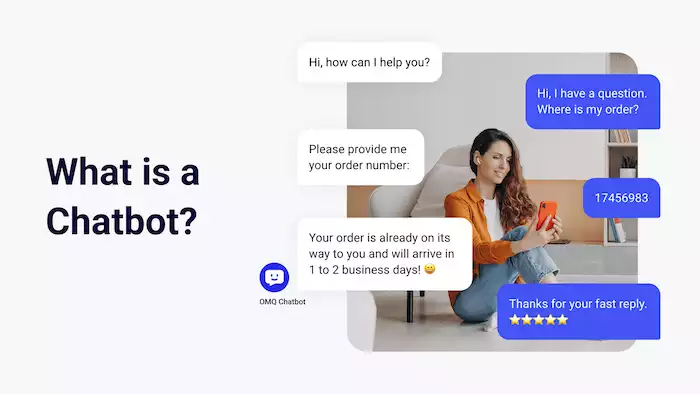
A chatbot is a computer program that you can interact with in a chat, such as on a website or Facebook Messenger.
Chatbots can be classified into two categories. The first, and most familiar type, is a rule-based chatbot. This chatbot works like a flow chart or a phone tree. It follows a script (written by a human) that presents buttons to press, like “1. Track my order” or “2. See store hours.” It will only respond to the exact keywords you provide on the buttons. For example, if you ask me something I don’t understand, I would have to respond, “Sorry, I don’t understand.”
Key Characteristics of Chatbots
Easy to identify, a chatbot mostly involves limited conversation that is channelized along a specific flow. Not adept at “small talk,” it gives away scripted responses chosen from a set of pre-written replies. This has its advantage of giving businesses complete control of what the bot says. They’re cheap to set up because they’re simple. One good chatbot can field many thousands of simple questions. Here, a human team needs to spend little time with the bot.
Ideal Use Cases for Chatbots
Because they excel at one job, chatbots are the ideal solution for many common business problems.
-
Answering Frequently Asked Questions (FAQs): This is the best job for a chatbot. It can answer "What are your hours?" or "What is your return policy?" all day, every day, so your team does not have to.
-
Basic Customer Support: A chatbot is ideal for simple support tasks, such as checking order status. A customer can just type "Where is my order?" and the bot can look it up.
-
Simple Data Collection: A chatbot can serve as a friendly interface. It can ask for a customer's name, email, and phone number, one question at a time. This feels more personal than a long, boring form.
-
Guiding Users: A chatbot can act as a guide. It can help a customer step-by-step through a simple process, such as booking an appointment or finding the right product category.
The fashion brand Ilaby Kids utilized the Botcake chatbot to streamline their in-chat shopping, allowing them to lower costs with CTM ads and shopping features. By guiding users through product selection and checkout, they successfully doubled their purchases and achieved a 54% reduction in Cost per Purchase for CTM Ads, proving the effectiveness of a well-designed, task-focused bot.
Defining Virtual Assistants

What is a Virtual Assistant?
A virtual assistant (or VA) is a much more advanced AI helper. It is not just built to follow a script; it is built to understand what you mean and what you want. It utilizes powerful AI and machine learning to learn, think, and perform numerous complex tasks.
A true VA uses advanced AI to understand context (what you are talking about) and intent (what you are trying to do). It does not just look for keywords. It also utilizes AI to generate new sentences that sound human. It does not just pick an answer from a list.
Key Characteristics of Virtual Assistants
Virtual assistants differ significantly from simple chatbots.
-
They can have human-like conversations. You can talk to them more naturally. They can understand if you change the topic or ask a follow-up question.
-
They learn and get smarter over time. The more you communicate with a VA, the more they learn about you and your habits.
-
They can connect to multiple tools simultaneously. A VA might be able to check your calendar, retrieve information from your sales database, search the web for an answer, and turn on your smart lights, all from a single command.
-
They can be personal and proactive. A VA might remind you about a meeting before you even ask because it saw it on your calendar and checked the traffic.
-
The most well-known are Siri on your iPhone and Amazon's Alexa. For business, an impactful conversational AI for a sales bot that can look up your past orders, understand the reason for your complaint, and recommend a new product you might like acts as a virtual assistant.
Ideal Use Cases for Virtual Assistants
You use a virtual assistant for the big, complicated jobs that a simple chatbot cannot handle.
-
Handling complex customer problems that need real back-and-forth problem-solving.
-
Giving personal recommendations (like an AI sales helper that acts like a personal shopper).
-
Doing many tasks at once (like "Book a flight to Hanoi for next Tuesday and add it to my Google Calendar").
-
Proactively helping customers who seem to be stuck on a website's checkout page.
Key Differences: Chatbot vs Virtual Assistant
So, what is the main difference in the chatbot vs virtual assistant matchup? Here is a simple breakdown to help you remember.
Intelligence and Learning Capabilities
Chatbots: Are mostly pre-programmed. They are "taught" what to say. If you want to add a new answer, a human has to go in and add it to the script.
Virtual Assistants: Are able to learn. They use Machine Learning (ML) to get smarter on their own. They recognize patterns in conversations and can refine their answers independently.
Conversational Nuance and Context
Chatbots: Are usually keyword-driven. They have a very short memory (they lack "context"). If you ask, "How much is the blue shirt?" and the bot answers "$20." If you then ask, "Where can I buy it?" a simple bot might get confused and not know what "it" refers to.
Virtual Assistants: Are intent-driven. They understand what you are trying to do. They can remember, or "maintain context," from many messages ago. It knows you are still talking about the blue shirt.
Scope of Functionality
Chatbots: Have a narrow job. They are built to do one or two things very well (like track a package or tell you the store hours). They are specialists.
Virtual Assistants: Have a broad range of responsibilities. They are designed to be versatile helpers that can perform a wide range of tasks. They can handle a much wider range of questions.
Integration and Data Utilization
Chatbots: Have simple connections. They might be connected to an FAQ page or a shipping company's website to track a package.
Virtual Assistants: Have deep connections to multiple systems simultaneously. They do not just answer questions; they use your business data (like your customer database or your calendar) to give you personal and helpful answers.
Cost and Implementation Complexity
Chatbots: Are cheaper and faster to set up. Using a "no-code" platform (where you do not need to be a computer programmer), you can build a great chatbot in just one day.
Virtual Assistants: Cost a lot more money and are more complex to build. They require a substantial amount of data, expert AI engineers, and a considerable amount of time to learn before they function effectively.
Choosing the Right Tool for Your Business

Now for the most important question: which one is right for you?
Assess Your Business Needs
First, ask yourself what problem you are trying to solve.
-
Are your customers asking the same 10-15 questions all day? If yes, you 100% need a chatbot. It will save you a huge amount of time and money. A virtual assistant would be like using a rocket ship to go to the grocery store. It is way too much power for such a simple job.
-
Do you need a tool that can plan a customer's whole vacation by checking flights, hotels, and their personal calendar all at once? If yes, you need a virtual assistant. A simple chatbot cannot do this.
Consider Your Budget and Resources
A chatbot is a low-cost tool that provides a fast return on investment (ROI). This means it quickly makes you more money (or saves you more money) than it costs to set up. It is the perfect choice for small and medium-sized businesses. A virtual assistant is a much bigger investment that costs more and often needs a team of experts to manage it.
Evaluate Scalability and Future Growth
Think about the future. A simple chatbot might fix your problems today, but what about next year when you have twice as many customers? It is often smart to choose a platform that allows you to start with a simple chatbot but provides the tools to add more advanced AI features as your business grows.
Hybrid Approaches
The best solution for most businesses is a hybrid approach. A smart system utilizes a chatbot as its primary helper. It is on the front line, answering all the simple, common questions. If a question is too hard, or if the customer gets upset and asks to "talk to a person," the system should have an easy and smooth way to "hand off" the chat to a human employee. This gives you the best of both worlds: the 24/7 speed and low cost of a bot, and the smart, friendly touch of a real person when it matters most.
For businesses seeking to implement this powerful hybrid strategy, Botcake provides a seamless integration of rule-based automation and AI-driven contextual replies. By training Botcake's AI with specific message flows and triggers, the AI can provide instant consultations, intelligently filter potential high-value customers, and assist in strategic remarketing to increase purchase rates. Additionally, it excels at re-engaging old customers through targeted marketing messaging. This approach boosts conversion rates by 35% and reduces manual workload by 90%.
Conclusion
In the chatbot vs. virtual assistant debate, there is no single "winner." The best tool is the one that solves your specific business problem. To see how an advanced AI-powered chatbot can automate your customer service and sales on Messenger, WhatsApp, and more, get started with Botcake today.